
5 Ways to Structure Your Artistic Practice Without Losing Your Freedom
- Manon Jodoin
- Dec 16, 2025
- 2 min read
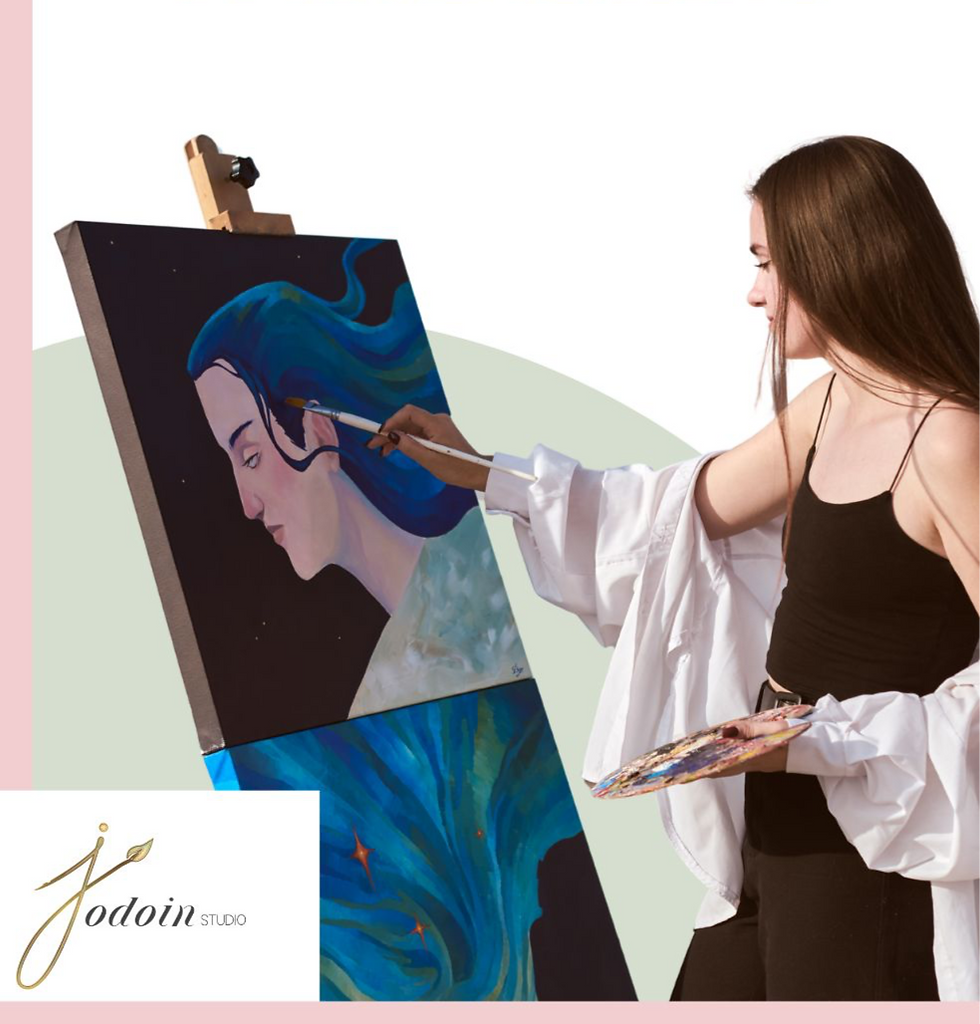
Structuring an artistic practice can feel contradictory to the very idea of creation.For many artists, structure sounds like constraint, rigidity, or the loss of spontaneity.
And yet, over time, I’ve learned the opposite.
In my own practice—between painting, surface pattern design, and the creation of creative tools—structure is not what limits freedom. It is what makes it possible. It reduces mental noise, removes unnecessary decisions, and creates space to actually create.
Here are 5 simple and realistic ways to structure your artistic practice without becoming rigid, without boxing yourself in, and without losing what matters most: freedom.
1. Define a flexible framework (not a rigid schedule)
Structuring your practice doesn’t mean planning every hour of your week.A flexible framework simply means deciding when and how creativity can exist in your real life.
For example:
setting aside a few regular time blocks each week
identifying the moments of the day when your energy is higher
accepting that some weeks will be less productive than others
Creative freedom doesn’t come from the absence of structure, but from knowing where creation is allowed to land, even when everything else feels unstable.
2. Separate creation time from reflection time
One of the most common sources of creative block comes from trying to do everything at once:
creating
analyzing
judging
planning
Creating requires a different mindset than organizing or evaluating.Structuring your practice means accepting that:
creation time can be imperfect, intuitive, and messy
reflection and evaluation come later, in a different mental space
Personally, this separation has helped me reconnect with a freer gesture, without the pressure to get things “right” immediately.
3. Use simple tools to reduce mental load
Tools are not meant to control creativity, but to support the practice.
A notebook, a simple tracking sheet, a reflection document, or a basic template can:
prevent you from starting from zero every time
clarify ideas that feel scattered
help you make more aligned decisions
These tools don’t replace creation.They create a safety net around it—especially when energy is low or doubt creeps in.
4. Allow yourself to create imperfect (even bad) work
Structuring your practice also means structuring your relationship with failure.
Creative freedom requires accepting that:
not every piece will be satisfying
some work exists only for practice
your hands and mind need repetition to recalibrate
Returning to or sustaining an artistic practice often involves moving through this uncomfortable phase.Structure is what allows you to continue despite it.
5. Regularly return to your personal definition of freedom
Finally, structure only makes sense if it serves something larger.
For me, artistic practice is first and foremost an expression of freedom:
freedom to create without justification
freedom to change direction
freedom to choose my projects
freedom to express without words
Structuring your practice means repeatedly asking a simple question:
Does what I’m putting in place make me feel more free—or less?
If structure starts to suffocate, it needs adjusting.If it supports you, it deserves to stay.
Structuring your artistic practice is not a betrayal of creativity.More often, it’s what allows it to last, evolve, and remain alive over time.
There is no single model to follow—only structures that serve your freedom, your rhythm, and your reality.


Comments